
From the archive
Patina : What the word covers
Image and context
Article
Patina is a collector's word, not a conservator's. It describes the visible accumulation of age on an object — and on paper it covers several unrelated things that happen for different reasons and mean different things about the item you are holding.
Some of it is inert. Some of it is a process still running. The difference matters more than the appearance does.
What you are actually looking at
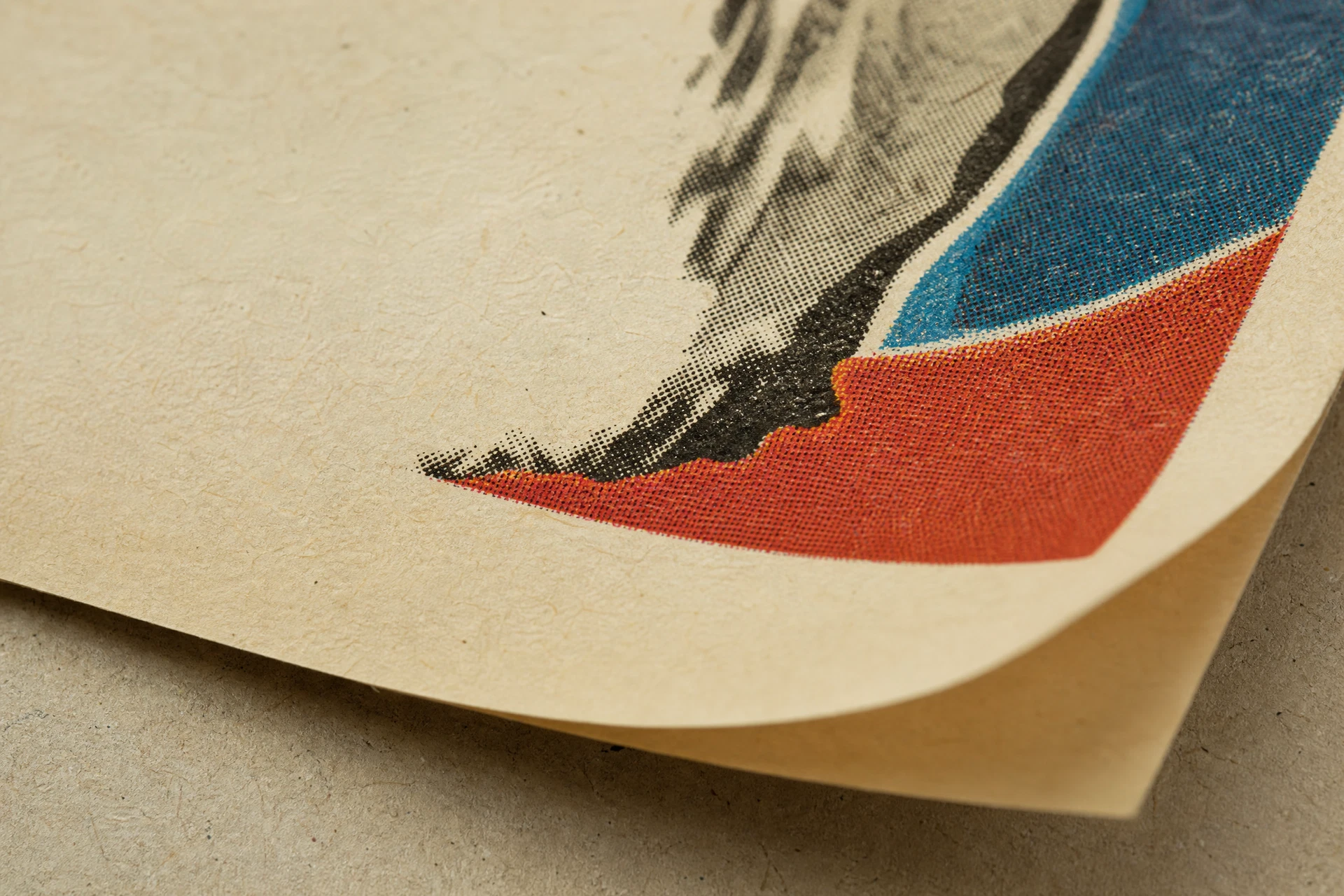
Toning. The overall warming of the sheet, from cream toward tan or brown. It can result from the paper's composition and its long-term exposure to light, air, and storage conditions. On many older papers, some degree of toning is expected. When even and stable in appearance, it usually reads as age rather than damage.
Edge darkening. A band of deeper colour along the outer edges, where the sheet was exposed while the interior was protected by the pages around it. Sharp and confined to the margins, this can be useful evidence that a page spent much of its life inside a bound issue rather than loose.
Offset. A faint ghost of the facing page transferred onto the sheet through prolonged contact, pressure, or interaction between printed surfaces. It is evidence of the object's original physical context and can sometimes help identify what ran opposite.
Foxing. Scattered brown, yellow, or rust-coloured spots or patches. The exact causes can vary and may involve the paper, its manufacture, storage conditions, or biological activity. Unlike ordinary toning, foxing should be treated as a condition issue rather than automatically described as character.
Acid burn. A hard brown line or area where the paper has been in prolonged contact with acidic material — a mat, backing board, mount, adhesive, or another sheet. Unlike general toning, the boundary is often distinct. It records something about the object's storage or framing history.
Handling marks. Soft folds, rounded corners, small pinholes, thumb-worn edges, and other signs of use. These are evidence that somebody read, turned, stored, clipped, or handled the thing.
Why it is not damage
Not every visible sign of age is deterioration in the same sense.
A page can be toned, slightly darkened at the edges, or softened through handling while remaining structurally sound and visually complete. These characteristics are part of the physical history of the object. Removing or disguising them is not automatically an improvement.
Framed, mild toning often becomes far less noticeable. Against an appropriate mat, it reads as the natural colour of aged paper rather than as a defect, and the page retains the visual evidence of the period through which it has survived.
That does not mean every mark should be romanticised. Tears, losses, active mould, severe staining, adhesive residue, and significant foxing are condition issues. They are described as such.
Where the line sits
We describe rather than romanticise.
Toning, edge darkening, and ordinary handling can be part of an object's age and history. Foxing, acid burn, tears, losses, staining, and tape residue are condition matters and should be identified clearly in the listing and photographs.
A dealer who calls every flaw patina is telling you something about the dealer.
Living with it
Keep it out of direct sunlight — this is the single thing that matters. If the piece will hang somewhere bright, UV-filtering glazing is worth considering.
Use acid-free mats and backing. A cheap mat can introduce new acid burn to old paper, sometimes producing a distinct brown line along the area of contact within only a few years.
Avoid large humidity swings. Bathrooms, damp storage areas, and exterior walls in cold climates can create conditions that encourage further deterioration.
Do not attempt to bleach, wash, repair, or flatten an old printed page yourself unless you understand the material and the consequences of treatment. Paper, ink, coatings, adhesives, and previous repairs do not necessarily react in the same way.
You can alter the evidence of age. You cannot undo its history.